Why Great Service Still Produces Too Few Reviews
You can do great work, hear "thank you" from a customer, and still get no Google review. Then you look at Google Maps and see another business showing up more often, even though you have more experience. The difference may be simple. They have 85 recent reviews. You have 23, and most are old.
Reviews help people choose between similar businesses before they visit your website or call. They also support local SEO and can help your Google Business Profile rise up the ranks. A steady stream of recent feedback tells future customers that real people are choosing you now.
Getting more Google reviews is not about asking harder or bothering customers. It comes from a clear process that asks the right customer at the right time. Marketing should be a system, not a gamble.
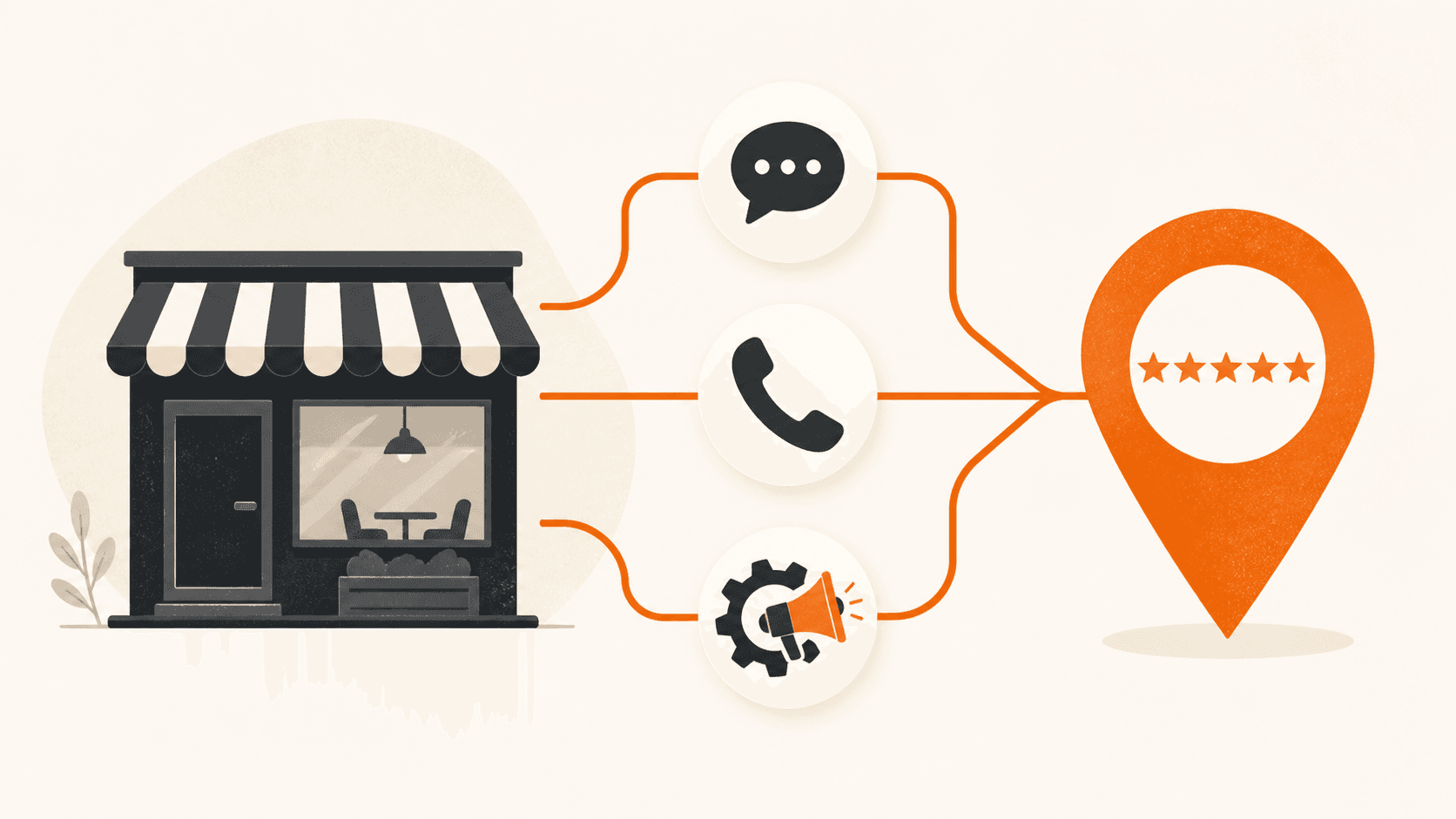
At Curve Communications, we usually see three sources of help: your front-line team, a CRM that automates the timing, and a marketing partner that connects reviews to the full lead flow.
Who Can Help You Build a Review System
Your team is the starting point. Reception staff, technicians, salespeople, hygienists, property managers, and project managers often have the best relationship with customers. They know when a job went well, when a concern was resolved, or when a client is genuinely relieved and happy.
A personal request at that moment carries weight. Still, relying on memory creates gaps. Busy staff forget. One customer gets asked twice, while another never receives a request. Timing becomes random, and good intentions do not turn into consistent reviews.
That is where we help build a connected marketing system. We can map out when a review request should go out, write messages that sound like your business, create direct review links, and train your team on the right moment to ask. We also look at whether your Google Business Profile gives people enough reason to call once they read those reviews.
Use Automation to Stay Consistent
CedarCRM can handle much of the routine work. After a completed job, appointment, or invoice, it can trigger a timely text or email. Your team can see who received a request and avoid sending the same person repeated reminders.
The strongest review system combines people and technology:
- Your team creates trust through a real customer experience.
- Automation keeps requests timely and consistent.
- Our marketing process connects reviews with local visibility, lead response, and booking.
- Your Google Business Profile turns that trust into calls and enquiries.
People make the relationship personal. Systems make sure the relationship does not get forgotten once the work is done.
How to Get More Google Reviews After Every Job
The best time to ask is after the customer has seen the result. A contractor can ask after a final walkthrough. A clinic can ask after a positive treatment outcome. A real estate professional can ask after possession day. A professional service firm can ask once the client's issue is resolved.
We build review requests around a simple three-step process:
- Finish the service well. Do not ask before the customer has received the value they expected. A review request cannot fix a poor experience, and it should never feel rushed.
- Ask in person when the customer is happy. Keep it short: "If you were happy with our work today, would you mind sharing a quick Google review? It helps other local customers find us." A direct, polite ask is enough.
- Send a direct review link within 24 hours. Text messages often work well because customers can open them quickly on their phones. Use the customer's first name when appropriate and keep the message brief.
Ask While the Experience Is Fresh
Timing matters more than a long message. Two weeks after an appointment, project, or sale, even a satisfied customer may have moved on to the next thing. When the experience is still fresh, the request feels natural and takes less effort to complete.
We also recommend that your request match the service experience. A home service company may send its text after the final invoice. A dental or healthcare office may send it after the appointment follow-up. A property manager may send it after a maintenance issue has been resolved.
This is part of The Invisible Sales Funnel. Completed work creates a review. The review builds trust. That trust helps the next person choose you when they compare local options.
Keep Your Review Requests Honest and Compliant
Google reviews need to reflect real customer experiences. Buying reviews, writing reviews for customers, or offering rewards for five-star ratings may seem tempting, but those shortcuts can damage trust and put your Google Business Profile at risk.
The goal is not perfect feedback. The goal is honest feedback from real people who have done business with you. A mix of thoughtful reviews also feels more believable to the next customer reading them.
Review gating is another problem to avoid. That means sending happy customers to Google while directing unhappy customers only to a private complaint form. We advise asking all customers for an honest review. You can give anyone with a concern an easy way to contact your team directly, but you should not block them from sharing their opinion publicly.
When reviews arrive, your response matters:
- Thank positive reviewers within a few days.
- Keep responses personal and brief.
- Reply calmly to negative feedback.
- Acknowledge the concern and offer to resolve it offline.
- Never argue with a customer in public.
A steady flow is better than a sudden rush. For your business, set a starting target that fits your customer volume, such as two to eight new reviews each month. Consistency looks credible, gives you fresh feedback, and supports your local visibility over time.
Choose Help That Connects to Your Lead Flow
A review tool by itself is not a marketing plan. The person or company helping you should understand your customer journey, booking process, Google Business Profile, and how reviews influence local search visibility.
Before choosing a system, ask practical questions:
- Will you own your Google Business Profile and review data?
- Can the system send requests after completed jobs, appointments, or invoices?
- Can it stop requests after a customer has already left a review?
- Can your team respond to reviews quickly from one clear place?
- Can it connect with your website, local SEO, ads, and follow-up process?
Those connections matter because reviews are only one part of a Three-Channel Marketing System. Local SEO helps people find you when they search. Google and Meta ads help create demand when someone needs help now. Your website and follow-up process turn that interest into booked work.
Turn Reviews Into Booked Work
Reviews can bring a prospect to the point of calling, but the call still needs an answer. Every missed call is a missed opportunity. If someone reads positive reviews, phones your business, and gets no response, the review did not create revenue.
CedarCRM can help route new leads, trigger follow-up, and give your team a clearer view of incoming enquiries. Speed to lead matters because warm prospects do not stay warm for long. Review volume, response time, booking rate, website conversion, and follow-up all affect your marketing ROI.
A 90-Day Growth Plan can show where these parts are breaking down. Sometimes the issue is not a lack of reviews. It may be slow follow-up, a weak booking path, or a Google Business Profile that does not make the next step clear.
Start Before Seasonal Demand Fills Your Calendar
By mid-October in BC, Thanksgiving has passed, colder weather is approaching, and many service businesses are heading into a busier period. Home services often see more urgent calls, while healthcare, real estate, education, and professional service businesses prepare for year-end demand.
Setting up a review process before the calendar fills up gives your team time to learn it, test the messages, and fix gaps. The practical takeaway is simple: ask after real value has been delivered, make the request easy to complete, and keep the process consistent enough that no satisfied customer slips through the cracks.
Make Your Customer Data Work Harder
When customer details, appointments, and follow-up sit in separate tools, your team spends too much time chasing information. At Curve Communications, we build CRM automation around a clear plan for how to get more Google reviews and stronger customer follow-up. Contact us to see how a connected marketing system can fit your business.