Your Website Should Bring Calls, Not Just Look Good
A professional-looking website is not enough if it is not producing calls, form fills, or booked appointments. Many small business owners invest in a polished site, then wonder why the phone is still quiet. A good-looking website and a lead generation tool are not the same thing.
Your website is often the first sales conversation a prospect has with your business. If visitors cannot quickly see what you do, who you help, where you work, and how to contact you, they leave. Marketing should be a system, not a gamble. Your website needs to connect with the channels that bring people in and the follow-up that turns interest into booked work.
Know Who Builds Websites That Generate Leads
The real question is not, "Who can build a website?" It is, "Who builds websites that generate leads for small businesses?" A graphic designer can make a site look polished. A web developer can make it function. Our conversion-focused website design centres on measurable business results.
The process starts with how your business actually wins work. Before we discuss colours, fonts, or page layouts, we want to understand your sales process. We ask about your average job value, service area, busy season, lead response time, and what happens when your team misses a call.
A qualified website partner should understand:
- Conversion paths that lead visitors to call, book, chat, or request a quote
- Local SEO that helps you rise up the ranks in Google Maps and local results
- Paid ad landing pages that match the offer a prospect clicked
- Tracking for calls, forms, bookings, and qualified leads
- Speed to lead, meaning how quickly your team responds after an enquiry
Different businesses need different paths. A contractor may need quote requests and project photos. A clinic may need clear appointment options and trust signals. A real estate team may need fast contact forms and neighbourhood information. A professional service firm may need case studies, credentials, and a simple consultation request.
Generic templates rarely account for these differences. They give every business the same page structure, the same vague headlines, and the same weak calls to action. We build around what your customers need to see before they choose you.
Conversion-Focused Website Design Turns Visits Into Enquiries
Conversion-focused website design removes friction. A visitor should understand your offer within seconds and know exactly what to do next. Every page should have one clear action, whether that is calling, booking an assessment, requesting a quote, or starting a chat.
The best pages answer four questions quickly: What do you do? Where do you work? Why should I trust you? How do I get in touch? When one of those answers is missing, visitors hesitate. When they hesitate, they often go back to Google and choose another option.
Our pages include practical conversion elements, including:
- Clear headlines that name the service, location, and customer problem
- Reviews, certifications, project photos, case studies, and appropriate guarantees
- Click-to-call buttons, short forms, booking tools, and chat options
- Service area pages that give local customers relevant information
- Mobile-first layouts for people searching from their phones
Speed matters too. A slow page, confusing menu, long form, or vague claim can cost you an enquiry. When someone compares a few local businesses, they often choose the company that feels easiest to reach and safest to trust.
Try this simple test on your phone. Open your homepage and look at it as though you have never seen it before. Within 10 seconds, can you tell what you do, where you work, why you are credible, and how to contact your team? If the answer is no, your website is creating work for the visitor instead of making their decision easier.
Connect Your Website to the Rest of Your Marketing
A website cannot produce consistent leads in isolation. It needs a connected marketing system that brings the right people to the right pages. We connect websites to local SEO, Google Ads, Meta Ads where they fit, our Google Business Profile, referrals, and AI search results.
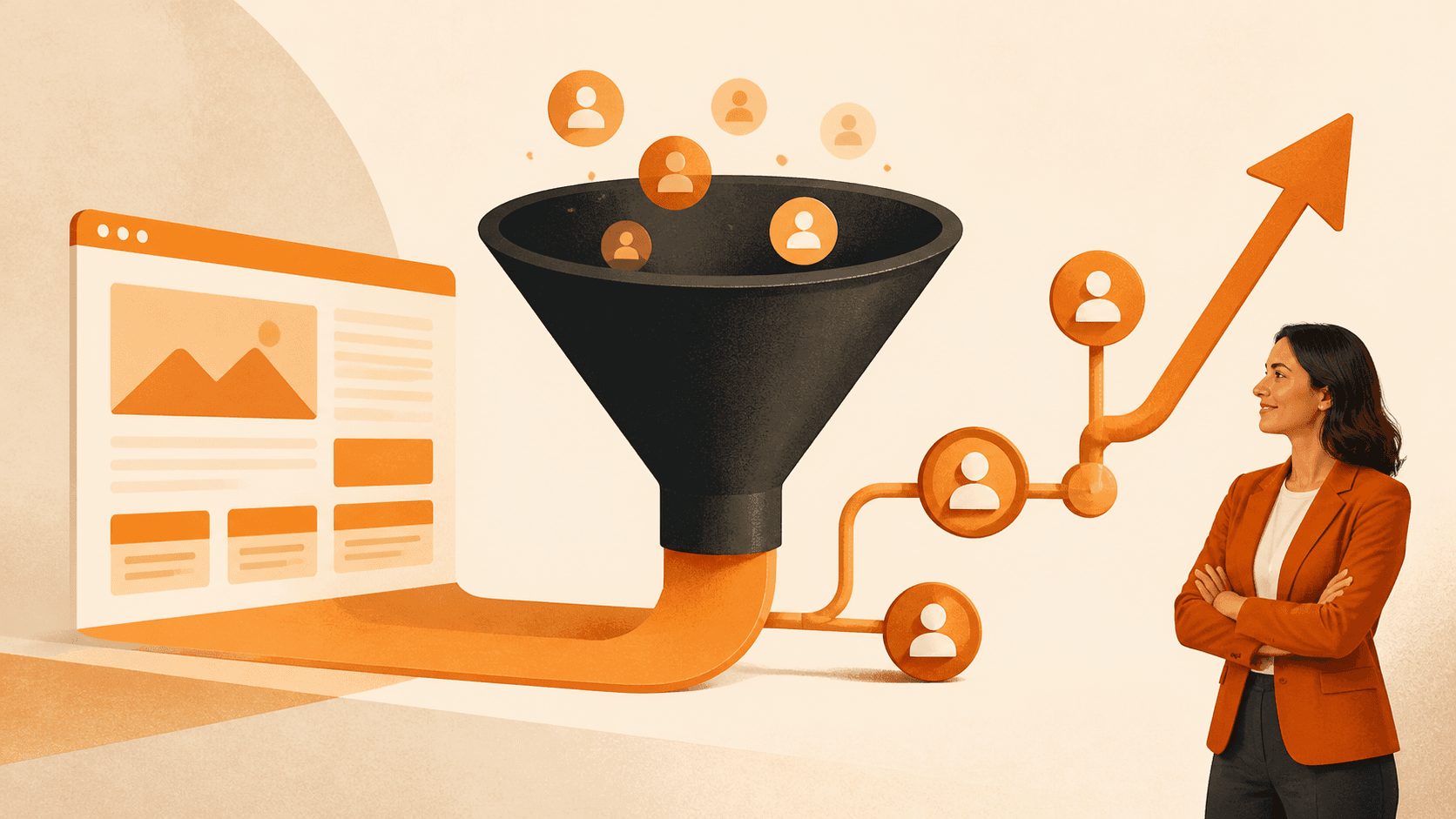
This approach is The Invisible Sales Funnel. A prospect may first see a Google search result, map listing, paid ad, review, referral, or AI answer. They may visit your website more than once before they call. Each step should continue the same conversation, not force them to figure your business out all over again.
Our Three-Channel Marketing System brings those pieces together:
- Demand capture through Google Search, Google Maps, and local SEO for people already looking
- Demand creation through Google and Meta Ads that put a clear offer in front of the right audience
- Follow-up and conversion through CedarCRM, automation, AI chat, AI voice, and clear sales processes
Traffic without follow-up wastes money. Every missed call is a missed opportunity. The first business to respond often has an advantage, which makes speed to lead a business issue, not just an admin task.
Track how quickly your team responds to calls, forms, chats, and booking requests. If a lead comes in after hours, CedarCRM and automation can help keep the conversation moving until a person can take over. Your website should not merely collect leads. It should help your team act on them.
Ask Questions That Expose Empty Website Promises
The right website partner welcomes direct questions. Results should be measurable, and you should know what happens after launch. If a proposal focuses only on design features, page count, and visual mockups, it may be selling a brochure instead of a sales tool.
During a website project review, ask:
- How will you measure leads from calls, forms, chat, and booking requests?
- How will the site support local SEO and help us rise up the ranks?
- Will you create landing pages for Google Ads or Meta Ads campaigns?
- How will leads flow into our CRM, and how fast will we respond?
- Who owns the website, domain, content, and tracking accounts?
Pay attention to what is missing from the conversation. A builder who never asks about your customer journey, sales process, or missed calls is not planning for real-world results. A cheap template with no local search strategy, tracking plan, or conversion path may cost less upfront, but it can leave you guessing about what is working.
Be cautious of instant ranking promises or guaranteed lead volumes. Search results, advertising performance, and lead quality depend on many moving parts. Our focus is on building the system you can measure, improve, and connect to the way your team actually sells.
A conversion-focused website design gives you a clearer view of the full process. You can see where visitors came from, which pages earned enquiries, how fast your team replied, and whether leads became booked work. That is how a website becomes part of your business, rather than a digital brochure sitting on the sidelines.
Build a 90-Day Growth Plan Before Spring Demand
Autumn is a smart time for many BC service businesses to review their website and lead flow. A 90-Day Growth Plan can give you time to fix weak pages, improve local visibility, set up tracking, and prepare campaigns before spring demand increases.
The businesses that generate more leads do not rely on a website alone. They connect conversion-focused website design with local SEO, paid ads, quick follow-up, and clear reporting. Start by finding the gaps between traffic, enquiries, response time, and booked work. Fixing the right gap first can make your marketing easier to manage and far more accountable.
Turn More Website Visits Into Real Enquiries
If your website gets traffic but not enough calls or form submissions, the problem may be in how it guides visitors to act. Our conversion-focused website design services build clear paths from the first visit to the next step. Curve Communications can review what is holding your site back and show you where to focus. Contact us to start the conversation.