Why Your Marketing Feels Like a Gamble
You spend money on Google, Facebook, maybe some SEO. The phone rings sometimes, and a few forms come in. When someone asks what actually worked, it is hard to answer. It feels like you are guessing, not running a system you can trust.
You do not need to be a data person to fix this. You only need a few simple numbers and a basic routine. Once you can see what works, you can stop wasting money on what does not. You can start building a connected marketing system that grows steadily.
In this article, we walk you through a simple way to track ROI in plain language. You see how a Three-Channel Marketing System and a CRM like CedarCRM can turn random leads into a trackable process you control.
The Real Cost of "I'll Just Know If It's Working"
When you do not track your marketing, you treat it like a bet, not a business system. You keep spending on channels that feel right but never prove it. You miss chances to double down on what is quietly working in the background.
Here is what usually happens when nothing is tracked:
- You keep paying for ads even if they are not bringing in buyers
- You assume referrals are enough until they dry up
- You blame "marketing" instead of a weak process or slow follow-up
Money often leaks out in boring ways. Missed calls and slow follow-up kill ROI more than a slightly weak ad. Every missed call is a missed opportunity. If you call back hours later, that lead has likely talked to someone else or lost interest.
Small business owners feel stuck because:
- You wear ten hats, so data always gets pushed to later
- Reports from agencies feel padded or confusing
- You are not asking for simple proof like cost per lead and cost per sale
Without those numbers, you are flying blind. The good news is you only need a handful of numbers to change that.
A Simple ROI Formula Any Owner Can Use
Let us start with the only numbers that matter each month:
- How much you spent on marketing
- How many leads came in from that spend
- How many of those leads became paying customers
From there, you can work out three simple formulas. Write these on a whiteboard if you want.
- Cost per lead
Total marketing spend divided by number of leads.
If you spend 2,000 dollars and get 40 leads, your cost per lead is 50 dollars.
- Cost per sale
Total marketing spend divided by number of new customers.
If those 40 leads turn into 10 customers, your cost per sale is 200 dollars.
- ROI in plain language
First, work out revenue from new customers.
If those 10 customers each spend 1,000 dollars, that is 10,000 dollars in revenue.
Next, think about profit. If your profit margin is 30 percent, you made 3,000 dollars in profit. You spent 2,000 dollars to get 3,000 dollars. You earned 1,000 dollars more than you spent on a 2,000 dollar investment. That is a 50 percent ROI.
You do not need fancy dashboards. You only need to be honest with these three steps every month.
Building a Simple Three-Channel Marketing System
Relying on one channel keeps you on edge. If you live on Google only, one algorithm change or a slow month can hurt cash flow. If you live on referrals, you have no control over when the next project shows up.
We Like to Keep It Simple: Our Three-Channel Marketing System
- Search: SEO and Google Ads to help you rise up the ranks when people are actively looking
- Social ads: Facebook and Instagram to create interest and capture leads
- Direct response: Email and text to follow up leads until they are ready to buy
The magic is not in any one channel. It is in how they connect. All leads from all three channels should flow into one place, your CRM.
When everything is connected:
- Every lead is tagged by source, like Google Ads, SEO, or Facebook
- You can see cost per lead by channel
- You can see cost per sale by channel
That is how your lead generation becomes trackable instead of random. Your work turns into a connected marketing system, not a bunch of disconnected tools.
The Invisible Sales Funnel and Speed to Lead
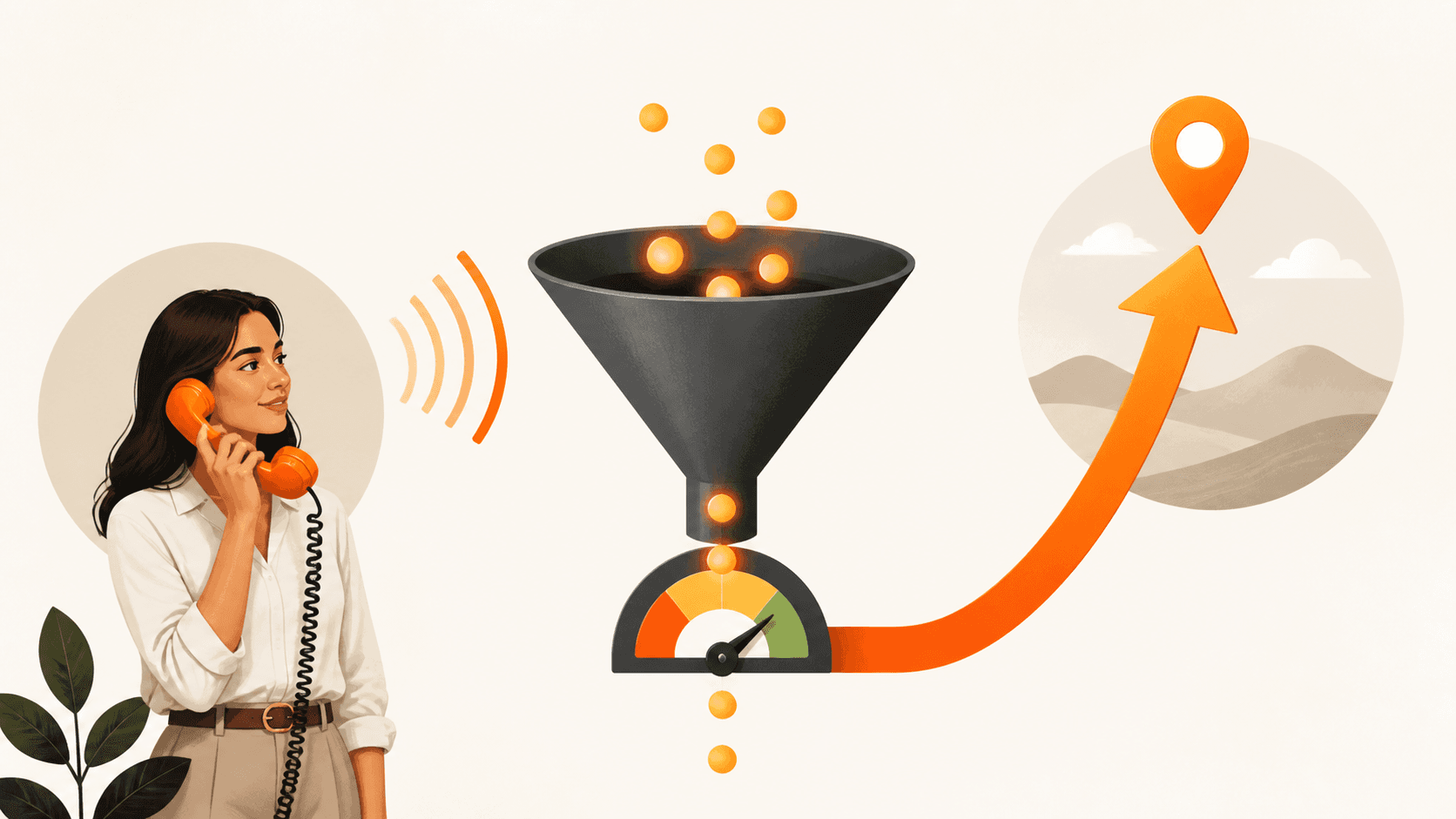
Most owners focus on the click. The real money is made in what we call The Invisible Sales Funnel. This is everything that happens after someone clicks your ad or finds your site.
Your Invisible Sales Funnel includes:
- The landing pages and forms people see
- The emails and texts they receive
- The calls and follow-up your team makes
You cannot always see it, but those steps decide if a lead buys or drifts away. If any step is slow or messy, ROI drops.
Speed to lead is a big lever here. Your chance of reaching a new lead drops fast after the first few minutes. If you wait an hour, your odds of closing that sale fall sharply. Calling or texting within 5 minutes can increase conversions compared to waiting.
Simple tools can do most of the heavy lifting for you:
- Use CedarCRM to send instant text replies when someone fills out a form
- Set automatic reminders so your team calls new leads within 5 minutes
- Log every call and message so "I forgot to follow up" stops being a problem
When your Invisible Sales Funnel is tight and your speed to lead is fast, your cost per sale usually drops. That is true even if your ads do not change at all.
Making ROI Crystal Clear With a 90-Day Growth Plan
You do not need daily reports. You need a simple routine you can stick to. We like a 15-minute scorecard review once a week and a 90-Day Growth Plan to spot real trends.
Your weekly scorecard can be as simple as:
- Total leads
- Leads by channel
- Cost per lead
- Cost per sale
- New revenue from marketing
If CedarCRM is set up properly, all calls, forms, and messages land in one place. Each lead is tagged by source. Your weekly numbers come from real activity instead of guesswork or a stack of spreadsheets.
Over 90 Days, You Focus on Three Stages
- Month 1: Get tracking in place. Plug your ads, website, and forms into CedarCRM.
- Month 2: Improve your Invisible Sales Funnel and speed to lead so more leads turn into sales.
- Month 3: Shift budget based on the numbers and plan your next 90 days.
This is where your mindset changes. Marketing should be a system, not a gamble. You stop asking, "Is this working?" You start asking, "How do we improve this by 10 percent next month?"
When your Three-Channel Marketing System feeds into a single CRM, and you review a simple scorecard every week, your lead generation starts to feel predictable and calm. You know where your money is going. You see what it is bringing back. You see exactly where to improve next.
Turn Your Website Traffic Into Reliable New Revenue
If you are ready to attract better-qualified prospects and turn them into long-term customers, we can help. At Curve Communications, our lead generation for small businesses services are tailored to your goals, market and budget. We will work with you to build a clear, measurable plan so you know exactly what is driving results. Have questions or want to explore next steps, contact us and let's talk about what is possible for your business.