Stop Letting Google Spend Your Money for You
You bumped up your Google Ads budget and waited for the phone to ring. It did not. Or worse, you saw more clicks, higher costs, and fewer real leads. It starts to feel like you are donating money to Google and hoping for the best.
We see this all the time with small businesses across BC. You are busy, Google keeps pushing "smart" suggestions, and you click accept because it sounds helpful. Then your spend jumps and your results slide. In this article, we will show you how to scale your ads with control so every extra dollar has a job.
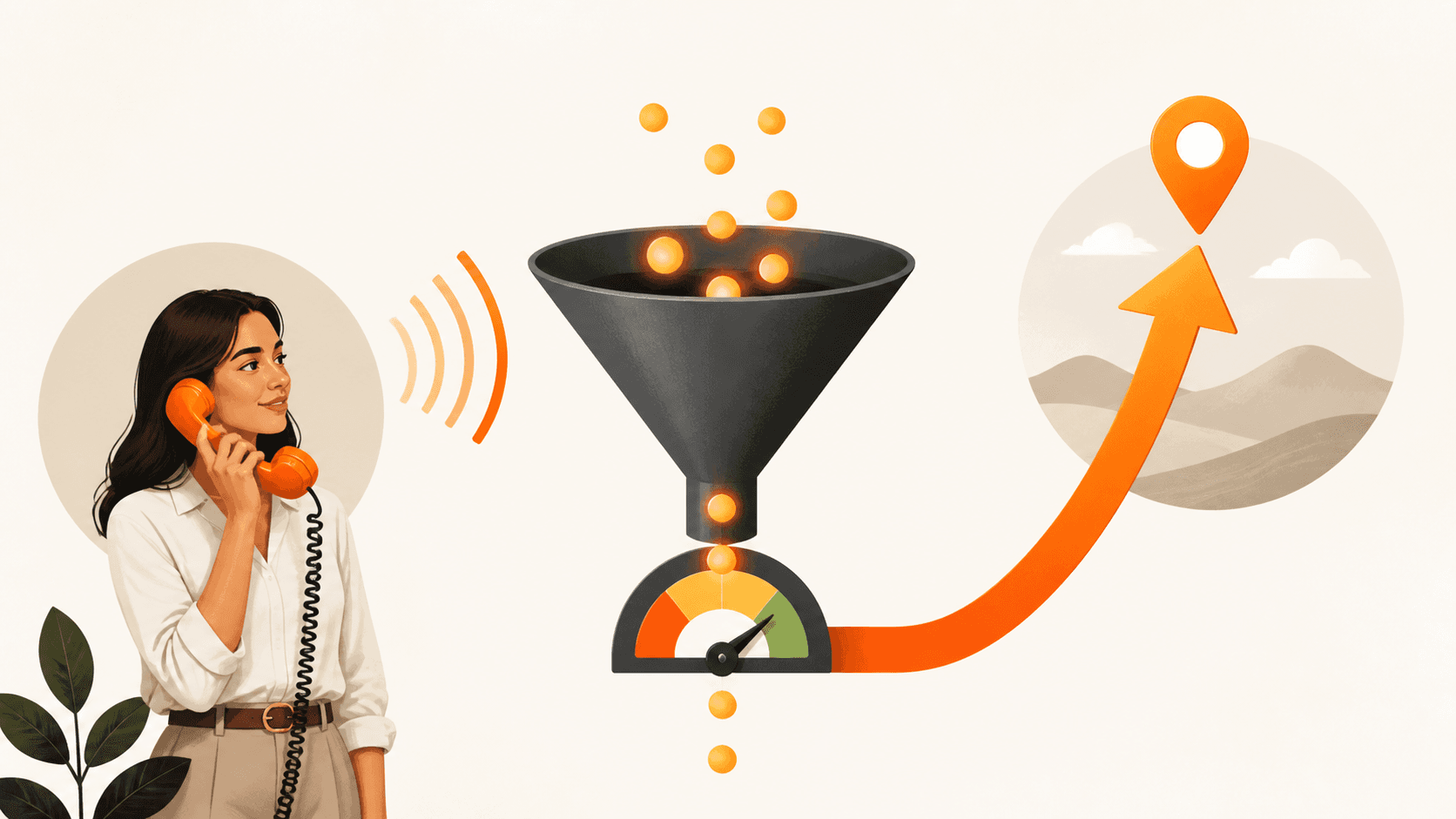
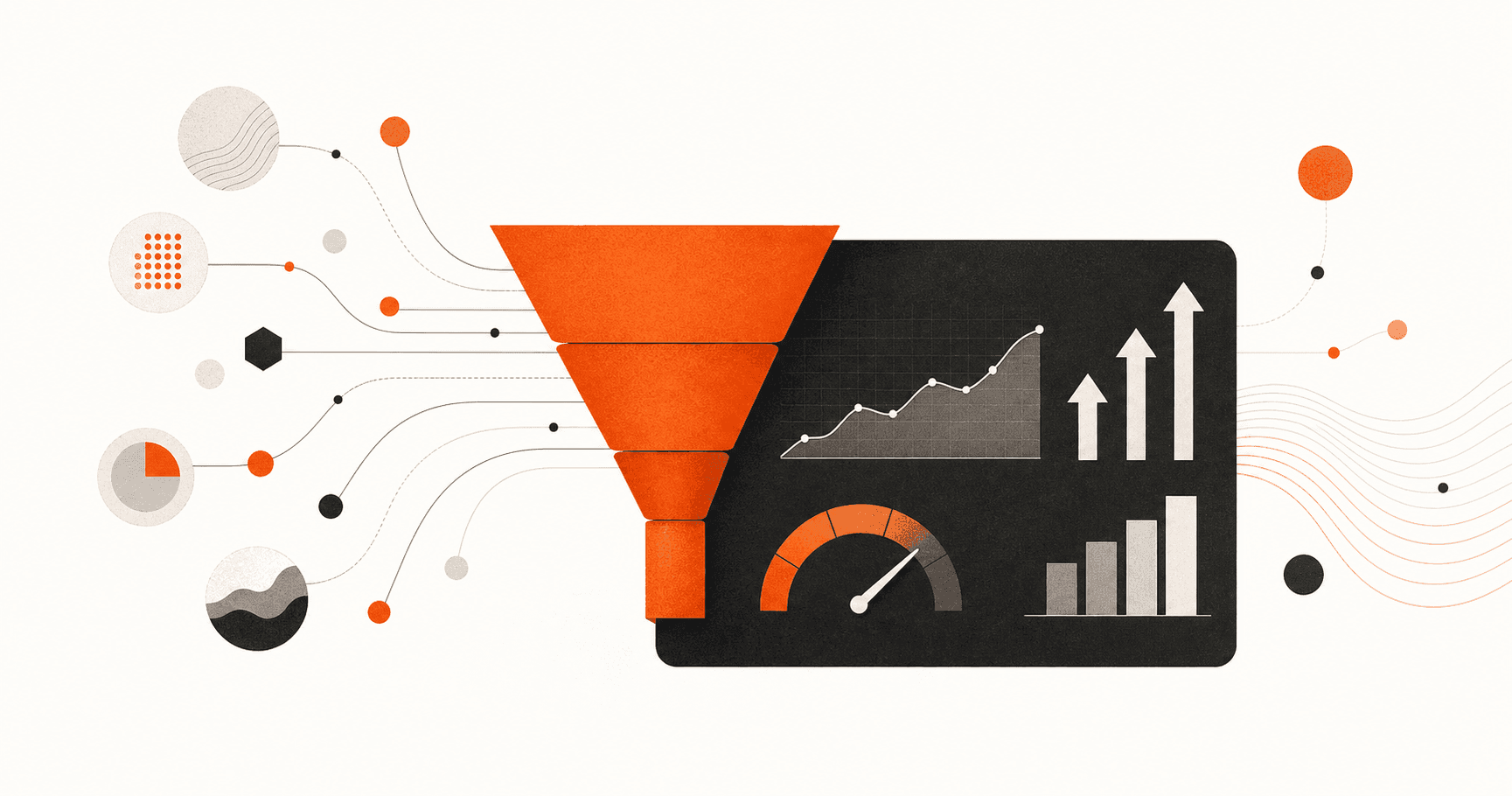
Marketing should be a system, not a gamble. Your Google Ads do not live on an island. They feed your website, your phones, your forms, your CRM, and your sales calls. At Curve Communications in Vancouver, we call this connected setup The Invisible Sales Funnel. Your ads, follow up, and sales all work together.
Our Three-Channel Marketing System uses:
- Google Ads to catch people with strong intent
- Meta ads to stay visible and warm people up
- Email or SMS to follow up and close more deals
Here we will focus on Google Ads. You will see how it fits into a connected marketing system that you can actually scale.
Get Your House in Order Before You Raise the Budget
If your current campaigns are not profitable, scaling just means losing more money faster. You want to prove your funnel works at a lower spend before you throw gas on the fire.
Use this simple rule before you scale:
- Your cost per lead is steady for at least 30 days
- Your close rate is steady for at least 30 days
- You are happy with your profit on those leads
For example, say in one month you:
- Spend $1,000 on Google Ads
- Get 20 leads
- Close 4 deals
- Bring in $4,000 in revenue
You spent $1,000 to make $4,000. That is 4 to 1. If you can repeat that pattern, you can start to test a higher budget.
Now look for leaks in The Invisible Sales Funnel. Every missed call is a missed opportunity. If you miss 30 percent of calls, your real cost per lead is 30 percent higher than it looks in Google. You paid for those clicks and they never had a chance to turn into sales.
A few basics to fix leaks:
- Use call tracking so you know which ads drive real calls
- Record calls so you can train your team to handle leads better
- Watch speed to lead, which is how fast you reply to new leads
Speed to lead matters more than most people think. If you wait even 10 minutes to call back a form lead, your odds of closing drop hard. Another company is already on the phone with them.
This is where a simple CRM like CedarCRM comes in. When we connect your ads to your CRM, every lead is tagged with the ad and keyword that brought them in. Then we can set basic automation:
- Instant text and email when a form comes in
- A task for a team member to call within 2 minutes
- Follow up sequences if they do not answer
This is how you move from random clicks to a connected marketing system that you can actually scale.
The Three Numbers You Must Know Before You Scale
Before you push your budget, you need three numbers. You do not need big spreadsheets from your accountant. You just need simple math.
- Cost per lead
Formula: Ad spend divided by number of leads.
If you spent $1,000 and got 20 leads, your cost per lead is $50.
- Close rate
Formula: Deals closed divided by leads.
If you closed 4 deals from 20 leads, your close rate is 20 percent.
- Revenue per sale
Formula: Total revenue divided by deals closed.
If you made $4,000 from 4 deals, your revenue per sale is $1,000.
These three numbers tell you if your Google Ads are safe to scale, even if you are not a numbers person. As a simple benchmark, if every $1 in ads reliably brings $3 to $5 back in gross revenue, you are usually ready to test higher spend.
Scale with controlled experiments, not big jumps. Use a simple ladder:
- Raise your daily budget by 20 to 30 percent
- Change nothing else at the same time
- Watch your three numbers for 7 to 14 days
If your cost per lead jumps more than 25 percent, or your close rate drops, roll back to the last safe level. Then review search terms, ads, and landing pages.
Google will show you clicks and cost. It will not show real revenue. Your CRM closes that gap. Tools like CedarCRM let you see which campaigns bring the most revenue per lead, not just the cheapest clicks. That is how you rise up the ranks in your market without burning cash on vanity numbers.
Smart Google Ads Management in BC, Not Wild Growth
Google Ads management in BC has its own quirks. Click costs in Vancouver are often higher than in smaller cities. Service areas, traffic, and even weather can shift demand. If you have past data, look at your last 12 months of leads by month.
You will often see patterns that should shape when and how you scale. To keep control, structure your campaigns for clear tests:
- Split campaigns by service type, like emergency plumbing and bathroom renovation
- Group keywords by intent, so urgent searches are in their own ad groups
- Start with phrase match and exact match for key terms
- Only test broad match when you can watch queries closely
For location targeting, stay tight at first. Use:
- City or specific postal codes
- Radius around your best neighbourhoods
- Gradual expansion once you see stable results
Your Three-Channel Marketing System will also lower costs over time. A simple setup:
- Brand search campaigns on Google so people who already know you find you fast
- Remarketing ads on Google to people who visited your site but did not convert
- Meta remarketing to follow those same visitors on social
Most buyers do not convert on the first click. They search and click an ad. They leave your site. Then they see you again on Meta. Finally, they fill out a form or call.
Your Invisible Sales Funnel should be built to show up early. You should stay in sight. You must follow up fast once they raise their hand.
Scale With Rules, Not Gut Feelings
Here is a simple 6-step process to scale safely:
- Pick one main campaign that already works and focus on that first.
- Confirm your three numbers for the last 30 to 60 days.
- Increase the budget by 20 to 30 percent and change nothing else.
- Watch cost per lead, close rate, and revenue per sale for 7 to 14 days.
- If results hold or improve, repeat the step. If they slip hard, roll back and review search terms and ads.
- Once one campaign scales, repeat the process with your next best performer.
Automation can help, as long as you keep control. Helpful automations include:
- Automated bidding on a target cost per action, once you have enough data
- Automated rules to pause low-performing ads
- Responsive search ads that test different headlines and descriptions
Be careful with Google's suggested changes. Broad match everywhere or auto applying all recommendations can wreck a good account. Use weekly reviews instead.
In those weekly reviews, you or your Google Ads management in BC partner should:
- Check search terms
- Pause bad or irrelevant queries
- Adjust bids or targeting on strong performers
Protect your cash with clear stop rules. For example:
- If this campaign loses more than a set dollar amount in a month, you pause and review.
- If cost per lead is above a set target for two weeks, you stop scaling.
Every change should point back to one idea. Marketing should be a system, not a gamble. Your rules keep you on the system side.
Turn Your Ad Budget Into a 90-Day Growth Plan
Real scaling takes at least 90 days. You need time to track, test, and spot patterns. We like to think in simple phases. We call this a 90-Day Growth Plan.
- Month 1: Fix the funnel and track everything. Connect Google Ads to CedarCRM, set up call tracking, tighten keywords, and get your speed to lead under control.
- Month 2: Scale one or two winning campaigns using the step ladder. Raise budgets slowly, watch your three numbers, and keep your rules.
- Month 3: Refine and improve follow up. Add one new test campaign or offer based on what you learned.
Google Ads will only work as well as the system behind them. Your website, phones, CRM, and follow up all matter. When your ads talk to CedarCRM, your team follows a clear script, and your habit is to respond fast, your Invisible Sales Funnel starts to do the heavy lifting.
If you take one next step, map out your own simple 90-Day Growth Plan on a single page. Write down your target budget, your three key numbers, and your rules for when to scale or pause. That single sheet will do more for your Google Ads than any smart button inside the platform.
Accelerate Your Growth With Targeted Ad Campaigns Today
If you are ready to attract more qualified leads and make every advertising dollar work harder, our team at Curve Communications is here to help. Explore how our Google Ads management in BC can refine your targeting, optimize ad spend, and improve your ROI. We will work with you to understand your goals, audit your current campaigns, and build a focused strategy that fits your budget. Have questions or want to discuss your next steps? Simply contact us and we will follow up with tailored recommendations.