Stop Lighting Your Marketing Budget on Fire
Your marketing should not feel like a money pit. You spend on websites, ads, or social media. Your phone still stays quiet. Your calendar does not fill.
You get reports, not revenue. Traffic, but no calls. The real problem is not that marketing does not work. The problem is gambling on random tactics instead of using a connected marketing system that turns clicks into real conversations and paying customers.
In this article, you will see how to judge a marketing agency before you sign anything. You will get a simple checklist you can use on any sales call. You will also see how real lead generation for small businesses should work so you can protect your budget.
Marketing should be a system, not a gamble. Your goal is not more marketing. Your goal is more qualified leads and customers. That means you need an agency that talks about revenue, speed to lead, and marketing ROI, not just clicks and followers.
Start with Your Numbers, Not Their Pitch
Before you listen to any shiny pitch, you need your own math. If you do not know what a new customer is worth, any quote from an agency is just a guess. You cannot judge if a proposal makes sense.
If a new customer is worth 2,000 in revenue and you close 30 percent of the leads you talk to, then you can back into a sensible cost per lead. An agency that skips this step is not focused on your return. They are focused on spending your budget.
Bring three numbers to any agency meeting:
- Lifetime value of a customer. How much a typical customer spends with you over time.
- Current lead volume and close rate. How many leads you get now and what percent you turn into customers.
- Capacity for the next 90 days. How many more jobs, patients, or deals you can actually handle.
Then ask questions that show if they think in marketing ROI or vanity metrics:
- "Based on my numbers, what does success look like in 90 days?"
- "How will you track real revenue, not just clicks and views?"
- "How often will we review cost per lead and cost per sale together?"
If they cannot answer simply and directly, that is a warning sign.
Build a Connected Marketing System, Not One-Off Tactics
Real lead generation for small businesses comes from systems, not random acts of marketing. A connected marketing system means all the parts work together so you are not guessing.
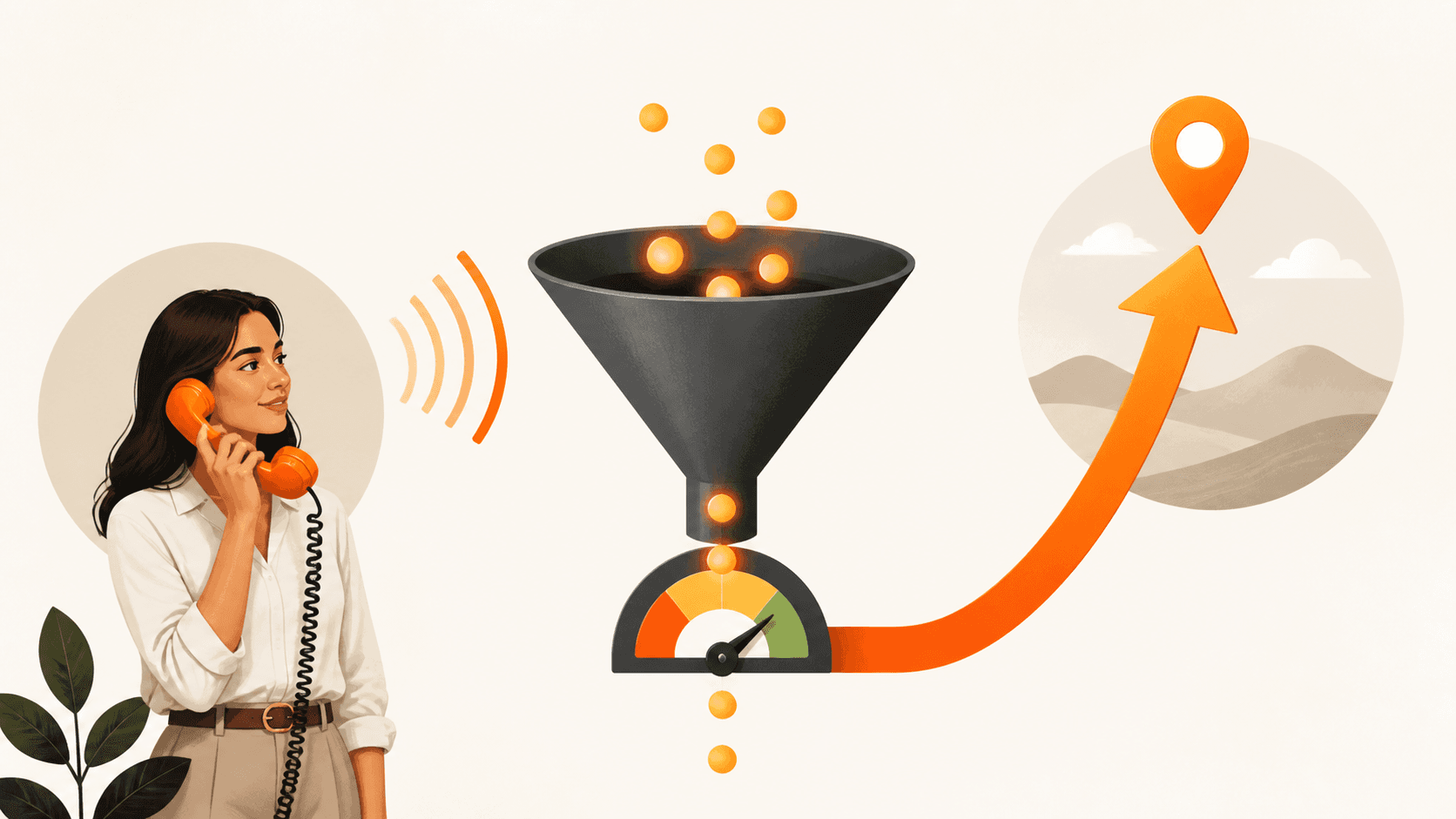
Your website, Google Business Profile, local SEO, Google Ads, Meta Ads, and follow-up should all be connected. Leads should move through what we call The Invisible Sales Funnel. From click to call or form to booked job to review to repeat business. Marketing should keep working while you are on a ladder, in a treatment room, or at a showing.
For most local service work, we use a simple Three-channel Marketing System:
- Channel 1: Search. Local SEO, GEO and AEO so AI search tools and traditional search can help you rise up the ranks when someone in your area looks for what you do. Your Google Business Profile is a big part of this.
- Channel 2: Paid. Google Ads and Meta Ads to get in front of people ready to act now. These are the phone rings this week channels.
- Channel 3: Nurture. Email, text, AI voice and chat, and remarketing to follow up with people who did not buy on day one.
To tell if an agency truly builds a connected marketing system, ask them to:
- Explain how a lead will flow from ad or search result into your CRM, not just how many impressions you might get.
- Show a simple diagram of your future connected marketing system.
- Talk clearly about website conversion, call tracking, speed to lead, and follow-up, not just traffic or brand awareness.
If they only sell you one channel, like SEO or social media posting, with no plan to connect it, you are back to gambling.
Test Their Plan for Lead Generation for Small Businesses
Local service businesses live and die by phones ringing and forms coming in. Every missed call is a missed opportunity. An agency that understands this will talk about booked jobs and appointments, not vague engagement.
Make sure they understand your world. Ask for examples in your space, like contractors, healthcare, or real estate. Do not let them distract you with giant national brands that do not look like your business.
A real lead generation plan should cover three main areas:
- Local SEO. Fixing listings. Cleaning up name, address, and phone data. Putting a review strategy in place. Creating content that answers real questions people ask. GEO and AEO work so AI search tools can find and trust you.
- Paid media. A clear structure for Google Ads and Meta Ads. Starter budgets, target areas, and a testing plan for offers and keywords.
- Website and funnels. Focused landing pages, clear calls to action, sticky contact buttons, and forms that connect directly to your CRM and automation.
Use questions that force them to get concrete:
- "Walk me through how my phone will ring more in the next 90 days."
- "How will you improve lead generation for small businesses like mine without just telling me to spend more on ads?"
- "What happens to a lead from the moment they click until they become a customer? Show me the steps."
If they cannot map that out, they are not thinking in systems.
Demand CRM, Automation, and Real Speed to Lead
Many small businesses think they have a marketing problem. Often they really have a follow-up problem. Speed to lead often matters more than fancy ad tricks.
Research shows that most leads go to the first business that responds. If you wait even half an hour to respond, your chances of closing that lead can drop sharply. Spend 3,000 on ads without fast follow-up and you might as well burn half the budget.
Good CRM automation should look like this for you:
- Every lead goes into one system. Not spread across email inboxes, sticky notes, and voicemail.
- Automatic text and email follow-ups go out within 1 to 2 minutes of a new lead arriving.
- You can see where every lead came from and what it cost to win that customer. This makes your marketing ROI clear.
That is why we built CedarCRM as part of our connected marketing system. CedarCRM ties your website, Google Business Profile, ads, AI voice and chat, and automation into one hub. AI voice and chat can respond to website leads or missed calls around the clock so you do not lose people who will not leave a voicemail.
When an agency talks seriously about CRM automation and speed to lead, not just ads and creative ideas, they are thinking like a business owner.
Use a 90-Day Growth Plan as Your Litmus Test
You do not need a five-year vision from a marketing agency. You need a clear 90-Day Growth Plan that shows how you start getting more qualified leads soon, without a long-term gamble.
Ninety days is long enough to fix basics and see clear movement in calls and form fills. It is short enough that you are not stuck for a year if the fit is wrong. Service businesses feel change fast. Your calendar is either filling or it is not.
A strong 90-Day Growth Plan should look something like this:
- Week 1 to 2. Setup. Tracking, CRM like CedarCRM, Google Business Profile tune-up, website conversion fixes, call tracking in place.
- Week 3 to 6. Launch. Google Ads and Meta Ads live, first local SEO improvements, AI voice and chat connected, speed to lead tested.
- Week 7 to 12. Optimise. Kill weak ads, boost winners, refine keywords, build a review engine, adjust based on real results.
To judge their roadmap, check that:
- It lists specific tasks, owners, and dates. Not just ongoing optimisation.
- Each action is tied to a clear outcome like more booked calls, better conversion, or lower cost per lead.
- Every piece is part of a connected marketing system. Not a pile of random one-offs.
If you use this lens, you will spot the difference between an agency that sells tactics and one that builds systems that grow with you.
Your next step is simple. Take this checklist into your next agency meeting and make them walk you through their system, their 90-Day Growth Plan, and how they will protect your marketing ROI.
Boost Your Leads And Grow Your Business Today
If you are ready to attract more qualified customers and steady your revenue, Curve Communications is here to help. Our tailored approach to lead generation for small businesses is designed to fit your goals, budget and timeline. We will work with you to build a clear, practical plan that turns interest into real opportunities. Have questions or want to discuss your next step, simply contact us and we will follow up promptly.