Stop Guessing Your Google Ads Budget
You know you should be on Google, but no one gives you a straight answer on what to spend. One person tells you 10 dollars a day. Another says you need 5,000 dollars a month or it is not worth it. You try something small, see nothing, then pause everything. It feels like Google Ads is just a money pit.
We see this pattern with small businesses across Canada all the time. The problem is not that Google Ads do not work. The problem is that marketing is treated like a gamble instead of a system. There is no single magic number. There is a simple way to find the right range for your business and plug it into what we call a three-channel marketing system, where your website, your ads, and your follow-up all work together.
The only question that matters: What is a lead worth to you
Before you ask how much you should spend on Google Ads, you have to ask what a lead is worth. By lead, we mean a real person who calls you, fills out a form, or books a visit. Not a website click. An actual hand raised.
If your average sale is 800 dollars and 1 in 4 leads becomes a customer, then every lead is worth about 200 dollars in revenue. If your profit on that 800 dollar sale is 400 dollars, then you can afford to buy a lead for less than 200 dollars and still make money.
Here is a simple 4-step formula you can copy:
- Write down your average sale value.
- Estimate your profit on that sale after costs.
- Estimate your close rate from lead to customer.
- Divide profit per sale by close rate to get a target cost per lead that still leaves strong profit.
For example:
- Average sale: 500 dollars
- Profit per sale: 250 dollars
- Close rate: 1 in 5 leads, so 20 percent
- Profit per lead: 250 x 20 percent (50 dollars)
If you can get leads under 50 dollars, you are in good shape. If they cost 30 dollars, you are winning. Once you know this number, you stop guessing. You can look at your Google Ads account and see if the cost per lead fits your system or if something needs fixing.
What small businesses actually spend on Google Ads
So what do other local businesses put in each month? While every market is different, we usually see ranges like:
- Very small service business: 750 to 1,500 dollars in ad spend
- Growing local business in a busy city: 1,500 to 3,000 dollars
- Multi-location or aggressive growth: 3,000 to 7,000 dollars and up
These are starting points, not rules. A plumber in Vancouver or Toronto will usually pay more per click than a niche consultant in a smaller town. Emergency or 24-hour keywords often cost more, but can also bring higher-value jobs.
Your ideal number also depends on:
- Competition in your area and industry
- The keywords you choose and how tightly they match buyer intent
- Your website speed and clarity
- Your response time when leads come in
So when you ask how much a small business should spend on Google Ads, the better question is how much you can invest to buy strong leads at a profit. Many owners under-spend, get only a trickle of clicks, collect almost no data, then decide Google does not work. The system never had enough fuel to show you what is possible.
A simple 90-day Google Ads budget plan
Thirty days is almost always too short to judge Google Ads. You need time to test, adjust, and see patterns. We like to think in terms of a 90-Day Growth Plan. For three months, you are buying data as well as leads.
Here is a simple process you can follow:
- Use the formula from earlier to get your target cost per lead. Then pick a monthly budget, using the ranges above as a quick check.
- Commit to that monthly number for 90 days instead of reacting week by week.
- Split the budget across your three-channel marketing system:
- Google Search ads to capture people already looking for what you do
- Local SEO and your website so you rise up the ranks over time
- Remarketing or branded search so you stay in front of people who already know you
- Set clear targets for the 90 days:
- Target cost per lead
- Number of calls or forms you want
- Rough number of jobs or sales you expect from those leads
Once the campaigns run, you adjust without guessing. If your cost per lead is below your target and your team can handle more work, you can safely increase your budget. If your cost per lead is too high, you do not just turn everything off. You fix weak ads, tighten your keywords, improve your landing pages, or improve your follow-up. The goal is a steady, connected marketing system, not random bursts of ad spend.
The invisible sales funnel behind your Google Ads
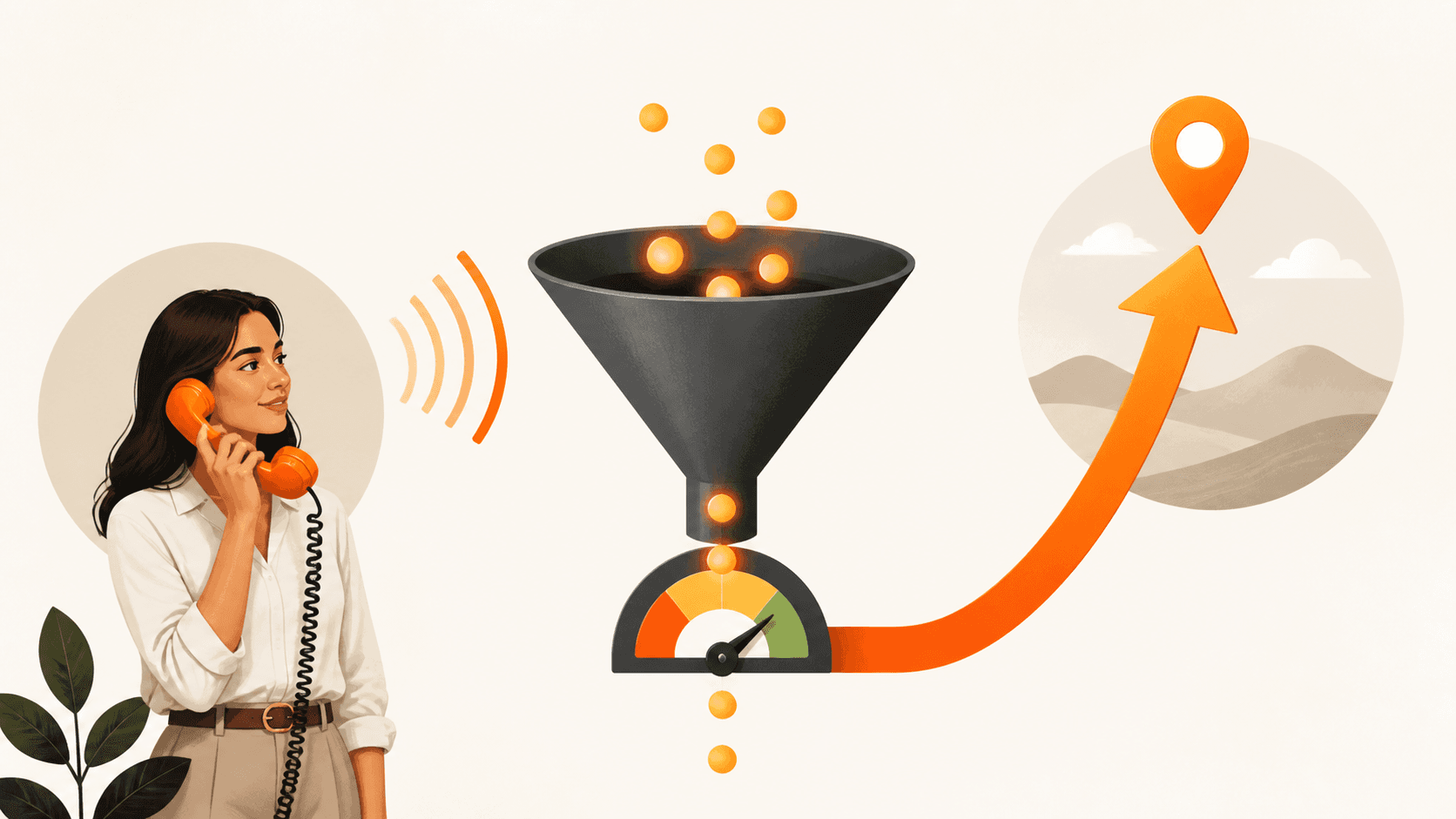
Google Ads only get people to your door. What happens after the click is what we call the Invisible Sales Funnel. That includes:
- Your website and landing pages
- Your forms and booking tools
- How calls get answered
- How quickly you follow up on missed calls, forms, and texts
If this funnel is weak, you may think Google Ads do not work. The real issue is leaks in your system. Every missed form, slow reply, or confusing page is money left on the table.
One of the biggest leaks is speed to lead. This means how fast you respond when someone reaches out. A simple rule is to respond within 5 minutes whenever you can. After that, the chance that the lead picks you drops quickly. They keep searching and call someone else. Every missed call is a missed opportunity, especially if you paid for that click.
This is where tools like CedarCRM come in. They can:
- Text back missed calls automatically
- Track every lead from first click to sale
- Remind your team to follow up at the right time
When your Invisible Sales Funnel is tracked inside CedarCRM, your Google Ads are no longer a black box. You can see which campaigns and keywords drive real revenue, not just clicks. That makes your budget decisions much safer.
Making Google Ads part of a connected marketing system
Google Ads work best when they are part of a connected marketing system, not a one-off trick. Our Three-Channel Marketing System connects:
- Your website and landing pages
- Your local SEO presence so you rise up the ranks in your area
- Your Google ads and your remarketing
All of this feeds into CedarCRM so every lead is captured, tracked, and followed up. Instead of juggling separate tools, you have one setup that turns traffic into qualified leads and customers.
So how much should a small business spend on Google Ads inside a system like this? The right budget is the one your profit can support, your team can handle, and your Invisible Sales Funnel can convert. As your system proves that more ad spend brings more profit, you can scale with confidence.
You know you are ready to scale when:
- You know your real cost per lead and cost per customer
- Your team responds fast, and very few calls are missed or ignored
- You can see in CedarCRM or your tracking which campaigns bring your best customers
There is no single magic number for every small business. There is a clear way to set a starter budget, commit to a 90-Day Growth Plan, and grow your spend only when your connected marketing system shows it can turn more clicks into real, profitable customers.
Your next step is simple. Use the 4-step formula, set a 90-day budget, and track every lead in CedarCRM so your Google Ads budget is a decision, not a guess.
Get Strategic Support For Profitable Google Ads
If you are still unsure How much should a small business spend on Google Ads, we can help you build a budget that matches your goals and capacity. At Curve Communications, we analyse your current marketing, industry benchmarks, and local competition to recommend a realistic investment level. We then create and manage campaigns so your ad spend is tracked, measured, and continuously improved. Ready to talk specifics for your business? Contact us today to get started.